The Cosmic Journey
Cosmology:
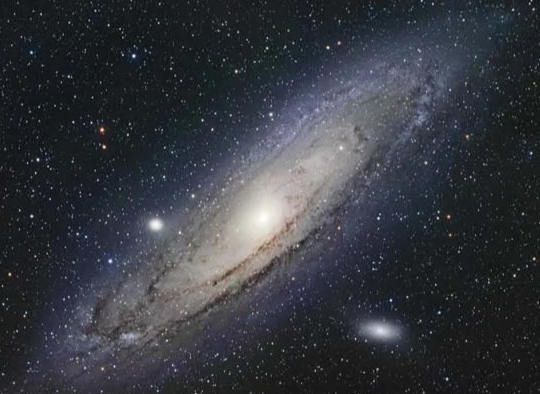
Cosmology is a scientific study of the universe as a whole, from its origin and evolution to its nature and properties. It is a branch of astronomy and physics that brings together the natural sciences in a joint effort to understand the physical universe as a unified whole. Cosmology also deals with the observable and theoretical aspects of the universe, such as the Big Bang, celestial mechanics, and the large scale structure of the universe.
Formation of the Solar System:
- Around 4.6 billion years ago, a vast cloud of gas and dust collapsed under gravity, leading to the birth of our Sun.
- As the Sun formed, the remaining material created planets, moons, and countless celestial bodies.
- This process, known as the nebular hypothesis, shaped the system we see today.
The Sun – The Heart of the Solar System:
- The Sun is a gigantic nuclear reactor, responsible for providing heat, light, and energy to all planets.
- It is composed mainly of hydrogen and helium, undergoing nuclear fusion to produce immense power.
- Solar activity, like flares and sunspots, influences space weather and affects Earth’s communication systems.
The Eight Planets – A Diverse Family:
Terrestrial Planets (Rocky Worlds)
- Mercury: The smallest planet, closest to the Sun, with extreme temperatures.
- Venus: Known for its thick toxic atmosphere and intense heat, often called Earth’s twin.
- Earth: The only known planet with life, featuring vast oceans and a protective atmosphere.
- Mars: The "Red Planet," home to ancient valleys, potential water ice, and future exploration missions.
Gas and Ice Giants
- Jupiter: The largest planet, with swirling storms like the Great Red Spot and dozens of moons.
- Saturn: Famous for its stunning ring system, made of ice and rock particles.
- Uranus: An icy world that rotates sideways, with a unique bluish appearance.
- Neptune: The farthest planet, known for its powerful winds and deep blue color.
Other Celestial Objects in the Solar System:
- Moons: Earth’s Moon stabilizes our planet, while Jupiter and Saturn have moons with oceans beneath their surfaces.
- Asteroids: Rocky remnants from the early solar system, found mainly in the Asteroid Belt between Mars and Jupiter.
- Comets: Icy bodies that travel in long orbits, forming bright tails when near the Sun.
- Dwarf Planets: Pluto, Ceres, and others don’t fit the full planetary definition but remain intriguing worlds.
Space Exploration – Discovering the Unknown:
- NASA, ISRO, and other space agencies send missions to study planets, moons, and deep space.
- Rovers like Perseverance explore Mars for signs of ancient life.
- Future missions aim to reach Europa and Titan, moons with potential for habitability.
- Space telescopes like James Web are uncovering the secrets of distant galaxies.
Conclusion
The solar system is a dynamic and ever-changing place, offering scientific discoveries and future possibilities. As humanity advances in space exploration, new mysteries will unfold.